
Advanced bioinformatics and digital image analysis services for spatial biology
Images generated from our spatial biology platforms contain huge amounts of visual data. Sirona’s in-depth bioinformatics and digital image analysis services complement them by generating quantitative information for a complete understanding of the samples.
Image processing and digital image analysis
Digital image analysis requires a bioinformatic process to identify single cells and their cell types. While it may sound simple, there are numerous considerations to take into account, such as cell shape, overlapping cells, marker signal to noise ratio, positive versus negative signal, and manual gating versus clustering. A thoughtful bioinformatics pipeline allows researchers to analyze digital images to assess numerous markers on a single tissue section to identify various cell populations while conserving precious samples.
At Sirona, we work with biopharma clients to accurately identify single cells (Figure 1A, 2A) and cell types from images generated on protein (Figure 1B) and transcriptomic-based (Figure 2B) platforms to answer scientific questions. Our powerful solutions can identify complex cell subsets, such as cancer associated fibroblasts and tumor associated macrophages, as well as different cell states which can lead to generation of novel hypotheses and insights.
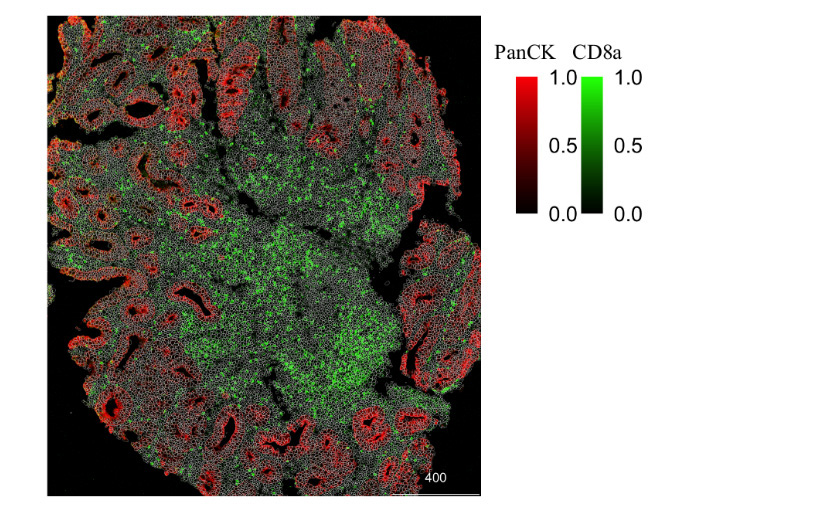
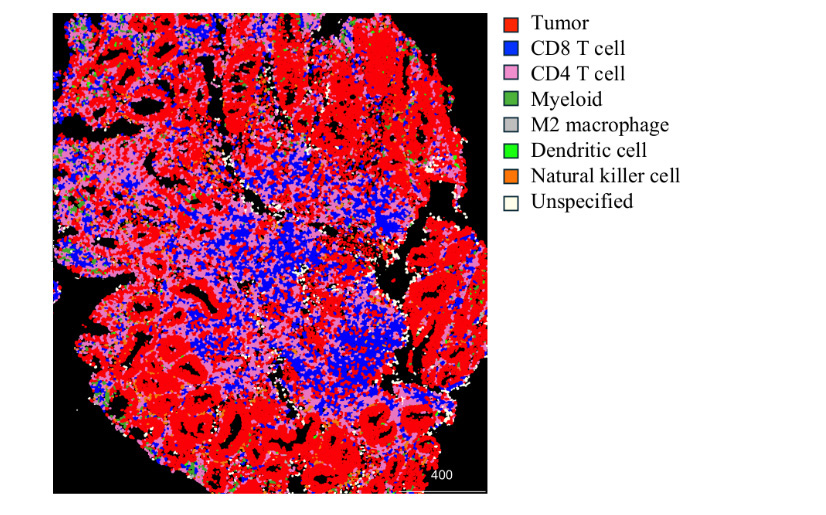
Figure 1. Digital image analysis identifies single cells and different cell types in CRC patient sample. CRC patient tissue section was stained with antibodies against tumor and immune markers, followed by imaging on the Hyperion IMC instrument. Digital image analysis was performed on the images to identify single cells with staining intensity of listed markers (A). Further image analysis identified tumor and immune cell populations (B).
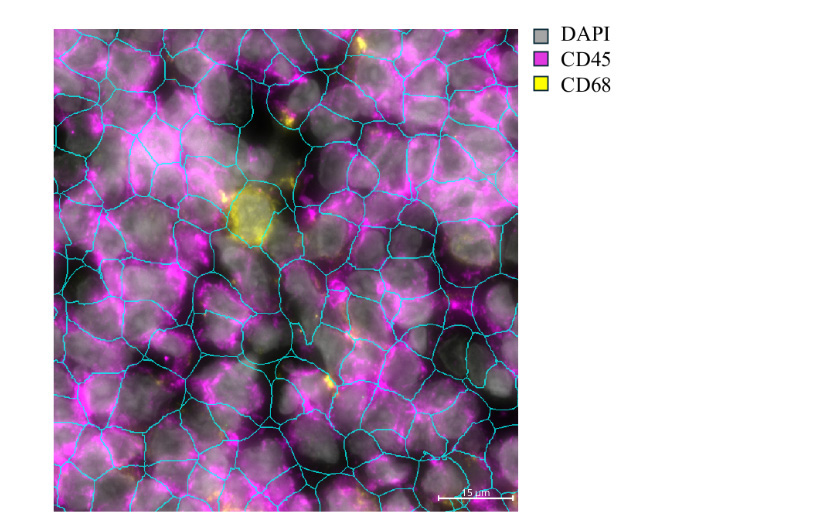
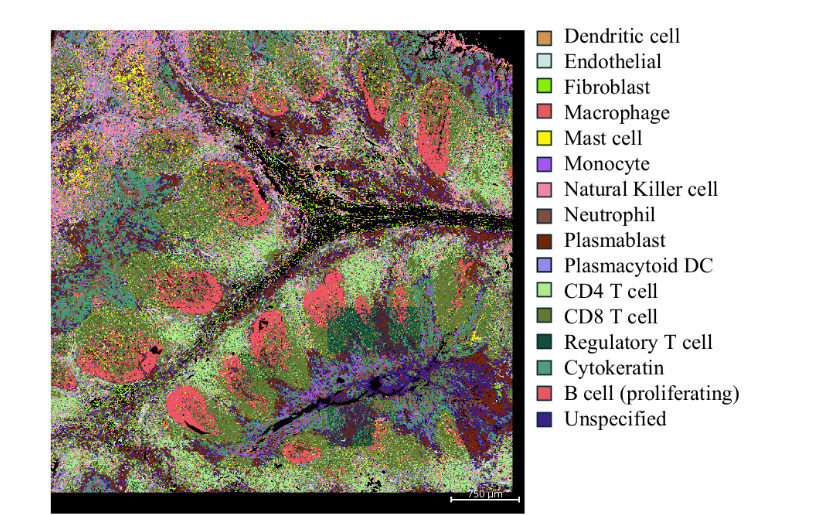
Figure 2. Digital image analysis of tonsil tissue identifies single cells and different cell types derived from Nanostring CosMX transcriptomic data. Tonsil section was processed per manufacturer’s protocol for the 6K transcriptome panel and images were acquired on the Nanostring CosMX instrument. Digital analysis was performed on the image to identify single cells and listed markers (A), followed by identification of cell types listed in the key (B).
Once cell types are accurately identified, we work with our clients to provide more advanced downstream quantitative assessments regarding cell population and spatial characteristics, as well as clinical relationships.
Cell Population Analysis
Following cell identification, a typical biomarker readout, is the frequency of certain cell types within the tissue to understand the disease setting. This analysis can also be used to assess pharmacodynamic (PD) activity of therapeutics when pre- and post- treatment samples are available. Depending on the molecule and its mechanism of action, there may be increases or decreases in particular cell types. These changes in frequency can be further dissected to test subsets within different cell populations, in contrast to the entire tumor cellularity, to provide further understanding of PD activity.
Sirona has partnered with numerous biopharma clients to generate this type of biomarker analyses. The data includes cell subset frequency from a particular image (Figure 3) and/or other assessments that incorporate data from multiple time points to examine trends.
Another typical biomarker that is assessed on tissue sections is the expression level of certain protein markers, in particular tumor antigens. Here, studies have demonstrated that the expression level can predict the activity and efficacy of therapeutics. With the images generated from our platforms, the pixel intensity of markers can be determined to assess the expression level, which can be used to generate predictive biomarker hypotheses and/or observe pharmacodynamic changes depending on the samples.
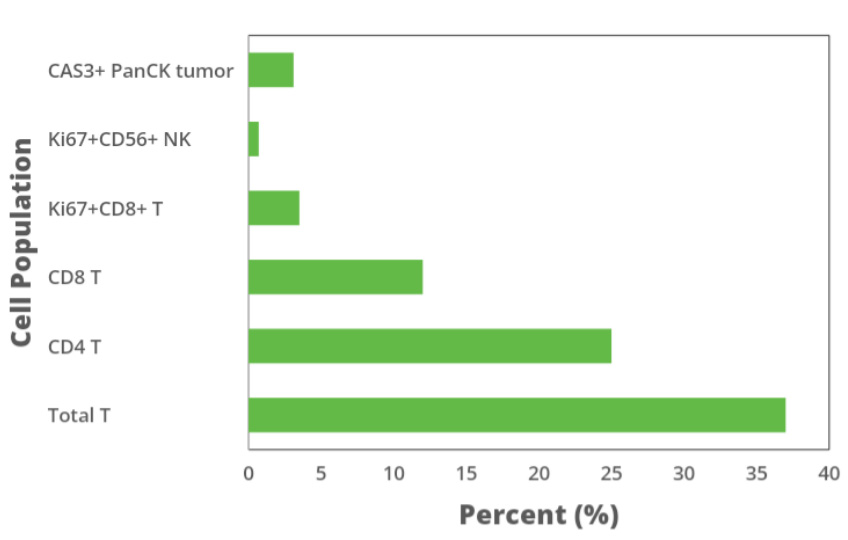
Figure 3. Frequency of cell populations derived from downstream analysis of cell identification image from CRC patient sample. Downstream analysis of data from Figure 1B cell identification image quantitates the frequency of (top to bottom) CAS3+PanCK+ tumor cells, Ki67+CD56+ cells, Ki67+CD8+ cells, CD8 cells, CD4 cells, and total T cells in CRC patient tissue section.
Sirona has also collaborated with numerous clients to generate this expression level data. The analysis can be performed on a pre-treatment sample to assess baseline intensity or in combination with post-treatment samples to determine changes in expression level as a function of therapy.
Spatial (Neighborhood) Analysis
Besides the ability to assess population characteristics, downstream digital image analysis also provides the opportunity to assess spatial relationships (or neighborhood analysis) between different cell types and/or cells in certain regions, such as tumor and stromal areas, to better understand diseased settings.
In oncology, studies have shown that tumors can be classified based on where immune cells reside, which determines a patient’s survival and response to immunotherapy. Patients who have poor survival outcome and do not respond to IO therapy tend to have a “desert” state where very few T cells are found in the tumor. In contrast, patients who have longer survival rates or respond to therapy tend to be “inflamed” where there is a high infiltration of T cells in the tumor region. Additionally, studies have suggested that stromal cells may have a role in survival and IO response by excluding immune cells from cancer cells. Together, these observations further warrant investigation of the spatial relationship between these populations.
There are numerous therapies in development targeting cells that activate T cells and require close contact between them. With the imaging data and their subsequent proximity analysis, observations regarding the spatial distance between these cells and/or cells in certain regions in a diseased state can be made, and, also, how new therapies can affect and/or is affected by these relationships.
Clinical Relationship Analysis
By leveraging paired pre- and post-treatment clinical trial samples, image-derived data—including population-level and spatial characteristics—can be assessed for correlations with treatment response and clinical outcomes.
As illustrated, we have evaluated correlations between population frequency changes in responders and non-responders to determine which PD changes might foreshadow patient outcome. Furthermore, analysis can include predictive biomarker assessment in which biomarkers, such as expression level or population frequency in a certain region, on pre-treatment samples can be correlated with response.
These insights enable refinement of clinical trial design by prioritizing the most relevant biomarkers which may progress into companion diagnostic development.
Sirona is unique in offering true end-to-end, technology agnostic spatial biology services. From platform selection, panel design and assay development through image acquisition and advanced digital image analysis we deliver high-impact data, actionable results, and biologically meaningful insights.